Kismayo, Farmaajo, and the Opposition’s Old Dilemma in a New Moment
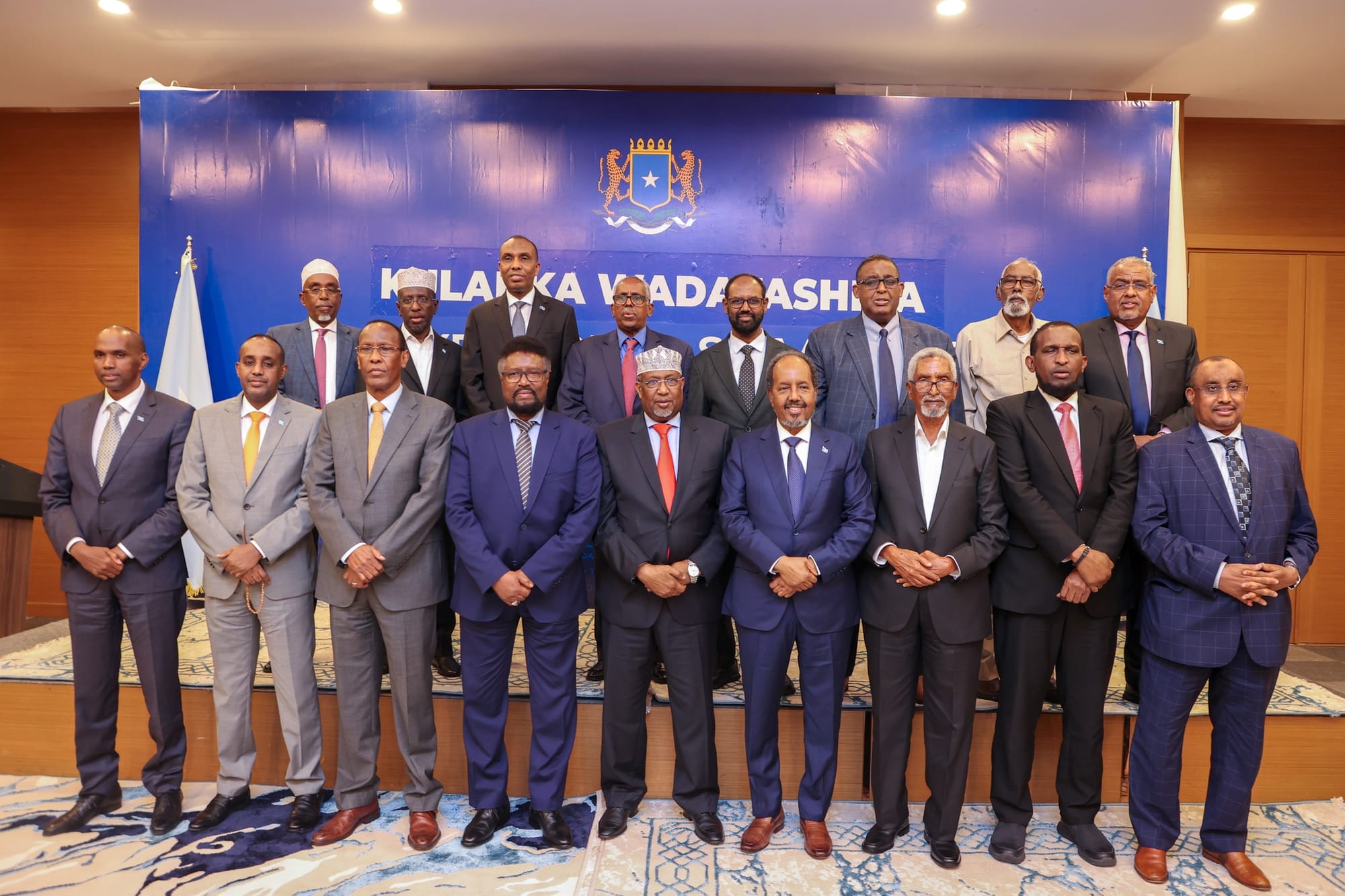
The long-anticipated opposition meeting in Kismayo is now scheduled for 20–22 December, according to credible sources. On paper, the gathering is meant to consolidate forces against the incumbent president, Hassan Sheikh Mohamud. In reality, it has already exposed two fault lines that may define its outcome even before it begins.
The first is straightforward but politically explosive: will former president Mohamed Abdullahi Farmaajo attend the meeting?
The second is more tactical but equally consequential: what happens if the federal government restricts or closes air access to Kismayo, effectively blocking opposition figures from attending?
Both questions cut to the heart of Somalia’s opposition politics - not just who is against the incumbent, but who can genuinely stand together.
A Divided Opposition Over Farmaajo
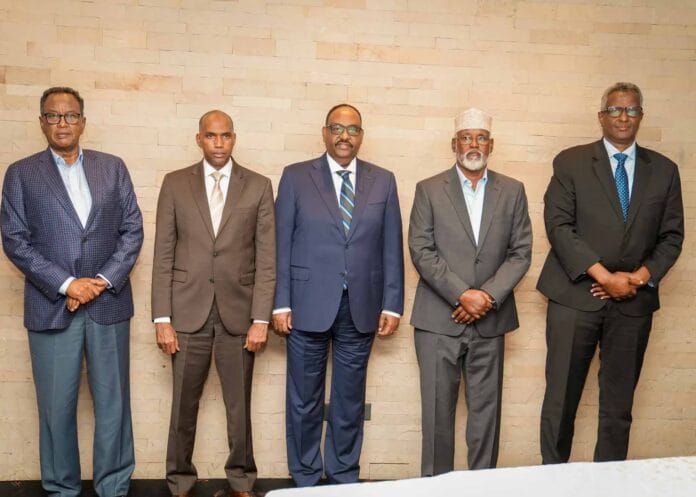
Within the opposition camp, Farmaajo’s potential attendance has triggered deep unease. Several key figures who once operated within his political orbit - including former Prime Ministers Hassan Ali Khaire and Mohamed Hussein Roble - are understood to be uncomfortable with his presence. However, notably, this opposition has remained largely private. Neither Khaire nor Roble has publicly articulated resistance to Farmaajo attending, a silence that itself reflects the sensitivity of openly confronting a former president with a residual support base.
Others have been more vocal. Abdirahman Abdishakur Warsame, a presidential aspirant, has consistently argued that Farmaajo should not attend unless he offers a public apology for the 2017 raid on Abdishakur’s residence, during which several of his guards were killed and Abdishakur himself was injured. For Abdishakur, this is not a symbolic grievance but a personal and political red line.
Former President Sheikh Sharif Sheikh Ahmed has challenged this stance, calling it selective and inconsistent. His argument is straightforward: reconciliation has occurred with others involved in that period, including former Prime Minister Khaire and former Mogadishu Mayor Abdirahman “Sadik John” Omar, both of whom issued public apologies. If reconciliation is possible with them, why is Farmaajo treated as uniquely unforgivable?
Abdishakur’s response has been equally direct. He maintains that apologies were the key distinction - and that clan affiliation did not influence his position, noting that both Khaire and Sadik John are his clansmen, while Farmaajo is not. Farmaajo, for his part, has indicated a willingness to apologize privately but sees no value in a public apology, a position Abdishakur rejects outright.
Behind the scenes, critics suggest a more pragmatic calculation: Farmaajo’s presence would place Abdishakur between two former presidents - Sheikh Sharif and Farmaajo - potentially shrinking his political stature within the room. Whether personal grievance or strategic positioning dominates remains contested, but the perception persists among other opposition figures as well.
Ahmed Madobe’s Unexpected Pragmatism
Perhaps the most striking voice in this debate has been Ahmed Mohamed Islam “Madobe,” the Jubaland president and Farmaajo’s fiercest adversary during his presidency. Madobe has publicly argued that Farmaajo should attend the Kismayo meeting.
His reasoning is not rooted in forgiveness. Madobe openly recalls alleged attempts to poison him, the deployment of Ethiopian forces against Jubaland, and the destructive conflict in Gedo. Yet his conclusion is pragmatic: Farmaajo is no longer president, and excluding him only weakens the opposition’s collective weight. His attendance, Madobe argues, would lend legitimacy and visibility to the opposition challenge against Hassan Sheikh.
Madobe has also framed the issue in institutional terms: for better or worse, Farmaajo is a former president and should be accorded the respect that status carries. In doing so, Madobe has positioned himself as the most strategic actor in the room, separating personal grievance from opposition arithmetic.
The Risk of Exclusion and the Airspace Question
If Farmaajo is excluded yet again, he retains a powerful alternative: political distance. From the sidelines, he could portray himself as a victim of elite exclusion, observe the inevitable friction between the opposition and the incumbent, and re-enter the political arena later with a renewed narrative of marginalization.
Meanwhile, the possibility of airspace restrictions looms large. Opposition figures calculate that if Hassan Sheikh Mohamud blocks access to Kismayo, it would reinforce perceptions of insecurity and intolerance. If he allows the meeting to proceed freely, the opposition gains space. Either way, they believe the optics work in their favor.
What Kismayo Really Tests
At its core, the Kismayo meeting is less about immediate unity and more about testing whether Somalia’s opposition can avoid its most familiar trap: fragmentation driven by personal history, unresolved grievances, and strategic mistrust.
The opposition’s stated aim is to prevent any extension of the president’s term beyond six months, arguing that prolonged incumbency enables wealth accumulation, patronage expansion, and the systematic fracturing of rivals. Yet the irony is hard to miss. The very dynamics they accuse the incumbent of exploiting are already resurfacing within their own ranks.
Whether Kismayo becomes a moment of recalibration or another missed opportunity will depend less on who attends, and more on whether exclusionary instincts once again overpower collective strategy. In Somalia’s politics, incumbents rarely defeat unified oppositions. More often, oppositions defeat themselves.